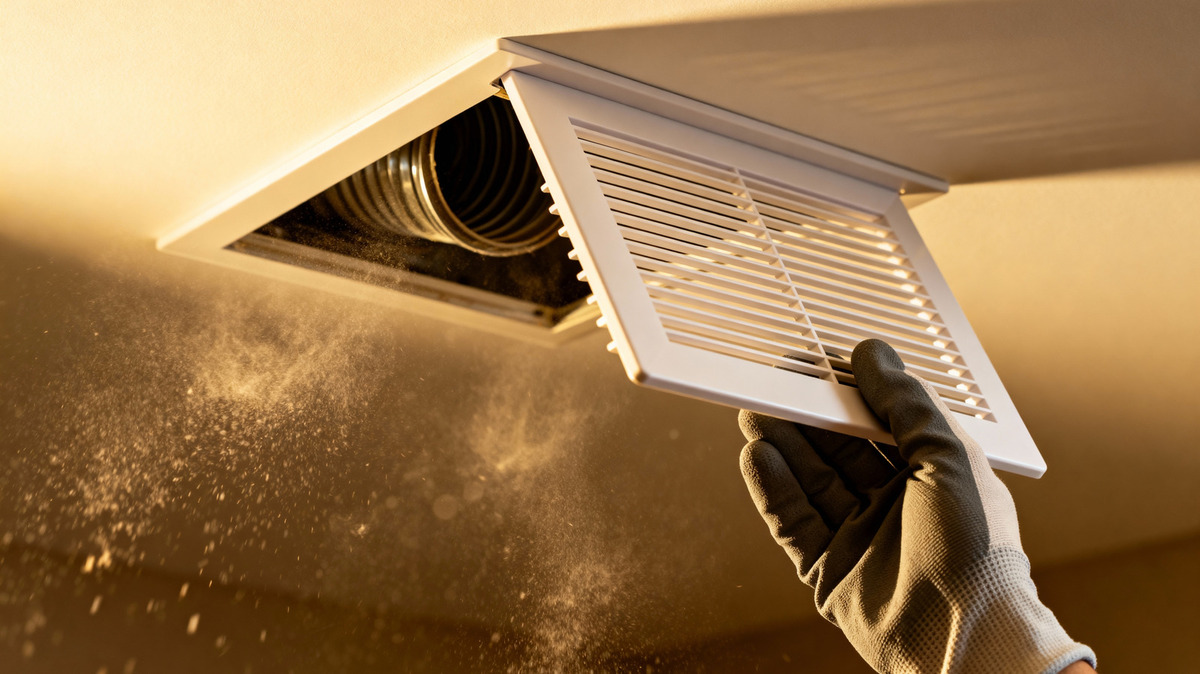
You look up at a ceiling vent and notice dark specks on the grille and a few more on the paint beside it. If you’re trying to tell whether it’s mold or dust around your air vents, start with two clues. Look at exactly where the material is, then check whether there are signs of moisture nearby. Loose lint on a dry grille often comes from ordinary household dust. Spots that keep appearing where the grille gets wet deserve a closer look.
Color, a photo, and a musty smell can help you document the problem, but none can confirm mold on its own. Fine particles can leave dark marks, and an odor can come from somewhere else in the room or system. A photo is most useful when it shows where the spots sit in relation to the vent, any water stains, and whether the affected area changes over time.
Compare the deposits before you touch them
|
What you see
|
What it could indicate
|
Safe next step
|
|
Loose dust or lint on a dry grille
|
Ordinary room dust can collect on the grille, particularly at a return that draws air in.
|
If it’s clearly loose surface dust and the grille is safely reachable, switch the system off and wipe the room-facing surface.
|
|
Dark streaks on the wall or ceiling around the vent
|
Air movement can deposit fine particles on paint. The shape of the mark can help someone decide where to look.
|
Photograph the streak and check the surrounding surface for droplets, staining, or damp paint.
|
|
Spots that recur where condensation forms
|
Repeated wetting can leave stains and create conditions for mold growth.
|
Note when droplets appear and arrange an inspection if the area keeps getting wet or the spots spread.
|
Check whether the spots are on the surface or inside the duct
A mark on a grille or on the ceiling beside it tells you about that surface. For example, fuzzy buildup on the face of a return grille can accumulate as room air passes through it. Dark streaks extending onto dry paint can form as airborne particles settle along the path of moving air. Either pattern can occur while the duct interior looks different.
If the opening is visible from a safe position, turn the system off and use a flashlight to look through the grille. You only need enough of a view to describe what you see. Note whether the spots are on the front of the grille, on the paint, or on a surface beyond the slats. Leave the grille in place and keep your hands and tools out of the opening.
If you see what looks like growth inside the duct, leave it undisturbed and arrange a professional inspection. Avoid scraping the material or spraying chemicals into the vent. The EPA advises keeping the HVAC system off if you know or suspect mold contamination inside the system, since running it could spread mold through the home.
Look for moisture and track when it returns
Check the area around the vent from floor level during normal cooling if there’s no reason to suspect contamination inside the system. Look for beads of water on the metal, a damp edge where the grille meets the ceiling, or a stain that extends beyond the opening. Photograph what you see and note whether it appears during cooling, after rain, or independently of either. If a spot is already dry, look for changes in its size or outline over the next few days.
When humid air meets a cold grille or nearby surface, moisture can condense into droplets. A stain can also come from water reaching the area from somewhere else, such as a plumbing or roof leak. The timing can guide the inspection. Droplets that repeatedly form during cooling give an HVAC technician a reason to look at conditions around the vent. A stain that grows after rain gives you a reason to investigate water entry above or nearby.
If you share photos with Green Wood Air Duct Cleaning, include one wide shot that shows the vent and surrounding surface, plus a closer view taken from a safe position. Mention whether you’ve actually seen moisture and where the spots are. That gives the provider more to work with than a close-up of a dark patch.
When to ask for a professional inspection
Arrange an inspection if spots keep returning in the same place, you see repeated condensation, a water stain spreads, or the material appears to be inside the HVAC system. Start with an HVAC technician when the grille repeatedly gets wet during cooling or the moisture seems to come from the equipment or ductwork. If the pattern points to a building or plumbing leak, have that source investigated.
Ask the inspector to show you the affected area and explain how water is reaching it. A stained ceiling, a wet duct liner, and suspected growth on an interior metal surface can require different work. The finding should be specific enough that you can see why the recommended service addresses it.
When duct cleaning may be appropriate
The EPA advises considering duct cleaning when an inspection finds substantial mold growth on hard interior duct surfaces, such as sheet metal. Wet or moldy insulation inside ducts should be removed and replaced because it can’t be cleaned effectively. In either case, address the moisture source so the conditions that allowed the problem to develop don’t return.
If an inspection finds a condition inside your ducts that warrants cleaning, Austin-area homeowners can contact Green Wood Air Duct Cleaning about residential duct cleaning. Share the inspection findings and ask which duct sections the proposed work would cover.