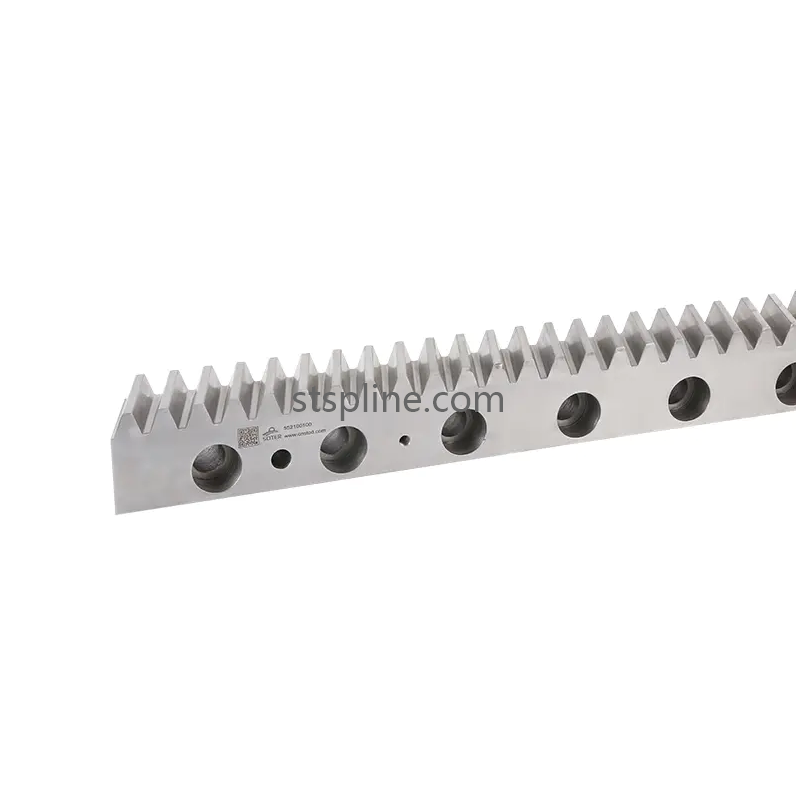
Industrial machinery often requires motion transmission components that match specific equipment structures, operating conditions, and installation requirements. Standard components can provide a practical solution for many applications, but specialized machinery may need adjustments to gear dimensions, tooth profiles, mounting structures, or overall configurations. In these situations, Custom Rack And Pinion solutions help equipment manufacturers integrate mechanical transmission components more effectively into their designs. By considering the complete motion system rather than an individual component, manufacturers can develop products that support consistent movement, suitable load transfer, and reliable machine operation.
A rack and pinion mechanism converts rotational movement into linear motion through the engagement of a toothed rack and a matching pinion gear. When the pinion rotates, its teeth engage with the rack teeth, producing controlled linear displacement. This relatively straightforward mechanical principle is widely used in CNC machinery, laser cutting equipment, industrial robots, automated assembly systems, and material handling equipment. However, the performance of the transmission depends on the compatibility of its components, including tooth geometry, material properties, machining quality, and installation accuracy.
Customization begins with understanding the requirements of the intended machine. Equipment designers may need a particular rack length, module, tooth direction, mounting arrangement, or cross-sectional profile. Some applications require straight teeth for conventional motion transmission, while others benefit from helical teeth to support smoother engagement. The selection depends on the machine's operating speed, expected loading conditions, available installation space, and motion control requirements. A well-defined technical drawing helps manufacturers evaluate these details before production begins.
Material selection is another important consideration. Carbon steel is commonly used for mechanical transmission components because it offers practical strength and machinability for a wide range of industrial applications. Alloy steel may be considered when greater strength or specific heat-treatment characteristics are required. The material should be selected according to the operating environment, contact conditions, maintenance expectations, and overall equipment design. Surface treatments and heat treatment can also influence wear resistance, surface hardness, and service behavior. These processes should be matched to the intended application rather than selected independently of the mechanical requirements.
Manufacturing accuracy has a direct influence on gear engagement and motion consistency. Rack production may involve cutting, milling, grinding, drilling, and finishing operations, depending on the product design and accuracy requirements. During machining, tooth spacing, tooth profile, straightness, and dimensional consistency need appropriate attention. If the rack and pinion are not manufactured to compatible specifications, uneven contact or excessive backlash may affect positioning performance. Inspection throughout production helps identify dimensional deviations and maintain consistency between individual components.
The design of mounting features also deserves careful consideration. A rack may need to fit a machine frame, guide structure, or customized support surface. Hole positions, reference surfaces, rack sections, and connection methods can all affect installation. Even a precisely machined gear component may not perform as expected if the mounting structure introduces misalignment. For this reason, manufacturers and equipment designers should consider installation conditions during the early design stage. Clear drawings and communication about assembly requirements can reduce unnecessary modifications during machine integration.
In automated equipment, transmission components often work alongside linear guide rails, bearings, servo motors, reducers, and motion controllers. Each element contributes to the overall movement system. The rack and pinion transmit mechanical force, while the guide system maintains the moving structure's direction and support. The motor and controller determine the movement profile and positioning behavior. A compatible transmission arrangement helps these components work together and supports stable operation during repeated production cycles.
Customization is especially relevant when equipment manufacturers develop new machine models or adapt existing production lines. Different industries may have distinct requirements for travel distance, installation orientation, working environment, and maintenance access. CNC machining centers need dependable axis movement, while laser cutting machines require controlled positioning across a working area. Industrial robots and truss manipulators may use rack-driven mechanisms for extended linear travel. Automated battery production and automotive assembly systems can also incorporate gear transmission components into material handling and positioning equipment.
Communication between the customer and manufacturer is essential throughout the development process. Technical drawings, sample components, application descriptions, and operating conditions provide useful information for evaluating a design. Manufacturers can review the proposed structure, identify machining considerations, and recommend suitable production methods. When requirements change, coordinated design adjustments help maintain compatibility between the rack, pinion, mounting structure, and related machine components.
For buyers, evaluating a supplier involves more than comparing product appearance or unit cost. Manufacturing experience, machining capabilities, inspection procedures, drawing support, and communication efficiency all influence the purchasing process. A supplier familiar with different rack configurations can help customers assess design options and maintain consistency across repeat orders. These factors are particularly important for OEM projects, equipment upgrades, and automation systems that require components made according to specific drawings.
As industrial machinery continues to develop toward greater automation and more flexible production, adaptable transmission components remain important to mechanical design. Custom Rack And Pinion products allow equipment manufacturers to address application-specific dimensions, tooth configurations, material choices, and installation conditions within a coordinated manufacturing process. By working with an experienced rack and pinion manufacturer, buyers can evaluate suitable solutions for their machinery and production requirements. Explore SOTER's rack products and manufacturing capabilities at https://www.stspline.com/product/straight-teeth-rack/