<!--StartFragment-->
Outdoor living areas are increasingly designed as extensions of indoor spaces, providing places for dining, relaxing, entertaining, and enjoying landscaped surroundings. A well-selected Outdoor Parasol Umbrella can contribute both functional shade and visual balance to these environments. Whether installed beside a garden table, positioned over patio seating, or arranged across a hotel terrace, a parasol offers a practical way to create a more comfortable outdoor setting. For importers and distributors, understanding the available designs and construction details helps identify products suitable for different customer groups.
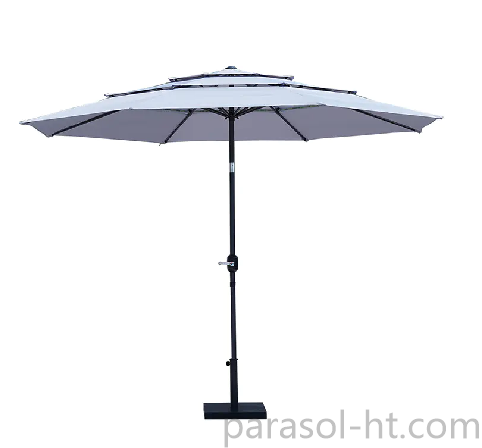
Traditional central-pole parasols remain a familiar option for residential gardens and outdoor dining areas. Their supporting pole is positioned beneath the canopy, usually through a compatible table opening or a separate base. This arrangement provides a straightforward structure and can work well where furniture placement allows the pole to occupy the center of the shaded area. Different canopy shapes, including round, square, and rectangular designs, allow buyers to select products that correspond with the size and arrangement of outdoor furniture.
Cantilever designs provide an alternative arrangement by positioning the supporting pole beside the shaded area. The canopy extends outward from the frame, leaving more usable space underneath. This configuration can be practical for lounge seating, poolside furniture, and certain commercial environments where a central pole might interfere with table or chair placement. Depending on the model, the canopy may incorporate adjustable positioning features to help users adapt the shade direction to changing sunlight conditions.
Canopy material has a significant influence on product appearance and everyday maintenance. Polyester is a commonly used fabric in parasol manufacturing, offering a wide range of colors and patterns. Buyers can compare fabric weight, texture, surface treatment, and color options according to their target market. Neutral shades are often considered for contemporary patios and hotel terraces, while brighter colors or patterned fabrics may suit garden retailers and leisure-oriented product collections. The appropriate selection depends on the desired appearance and the requirements of the intended application.
Frame construction is equally important when evaluating a parasol. Metal poles and ribs provide the supporting structure for many contemporary models. Aluminum components are often considered when buyers prefer a relatively lightweight frame, while steel may be selected for different structural designs. Some collections also use wood or wood-effect finishes to create a more traditional outdoor appearance. The frame should be evaluated together with canopy size, opening arrangements, product weight, and storage considerations.
The opening system determines how easily users can operate the parasol. Smaller models may use manual push-up mechanisms, while other designs incorporate a hand-crank system. Certain cantilever models may feature more complex operating arrangements depending on their canopy structure. During product evaluation, buyers should consider handle accessibility, movement smoothness, component construction, and the ease of closing the canopy when it is not required. Product instructions should clearly explain the correct operating procedure.
A suitable base is necessary for many freestanding parasol installations. Base requirements depend on the pole diameter, frame design, and intended placement. Some models are compatible with portable bases, while others may be designed for particular support arrangements. Buyers should confirm compatibility before ordering instead of assuming that all bases can be used with every umbrella. For commercial projects, the availability of compatible support accessories can also simplify product planning and installation.
Residential gardens provide one of the most common applications. A parasol can be positioned above a dining table, beside outdoor sofas, or near a seating arrangement to establish a defined relaxation area. On smaller balconies and patios, canopy dimensions and pole placement become especially important because available space is limited. A suitable design should allow users to move around furniture comfortably while maintaining the intended shaded area.
Hospitality environments introduce additional considerations. Restaurants and cafés often use parasols to provide shade over outdoor dining tables, helping create comfortable seating arrangements for customers. Hotels may use coordinated models around swimming pools, landscaped gardens, and open-air lounges. In these settings, appearance is important because the parasols become part of the overall property design. Consistent canopy colors and frame finishes can help create a unified visual identity across different outdoor zones.
For distributors and wholesale buyers, product selection should reflect the needs of the local market. Retail customers may prioritize appearance, convenient operation, and compatibility with existing garden furniture. Commercial purchasers may focus more on coordinated designs, available accessories, replacement components, and purchasing arrangements. Buyers should review product images, material descriptions, construction details, packaging information, and available model variations before making sourcing decisions.
Customization offers another consideration for businesses developing branded outdoor furniture collections. Depending on the model and supplier arrangements, buyers may discuss canopy colors, printed logos, fabric patterns, and frame finishes. These options can help retailers, hospitality suppliers, and outdoor furniture distributors create collections that match their sales strategies. When discussing customization, it is useful to provide clear artwork files, preferred color references, target quantities, and packaging expectations at an early stage.
Regular maintenance helps preserve the appearance and usability of a parasol. Users should clean the canopy according to the fabric care instructions and keep the frame free from accumulated dirt. The opening mechanism and moving connections should be checked periodically. When the product is not in use, closing and storing it appropriately can reduce unnecessary exposure to outdoor conditions. Users should also follow the supplier's guidance concerning installation, operation, and suitable weather conditions.
When sourcing an Outdoor Parasol Umbrella, buyers should consider canopy design, frame materials, operating systems, base compatibility, and the environment in which the product will be used. A carefully selected range can serve residential gardens, patios, restaurants, hotels, and outdoor leisure projects. Linhai Hongtai Leisure Products Co., Ltd. provides outdoor leisure product options for international buyers seeking suitable parasol and shading solutions. Wholesalers, importers, and distributors can review the company's offerings and discuss product requirements at https://www.parasol-ht.com/.
<!--EndFragment-->