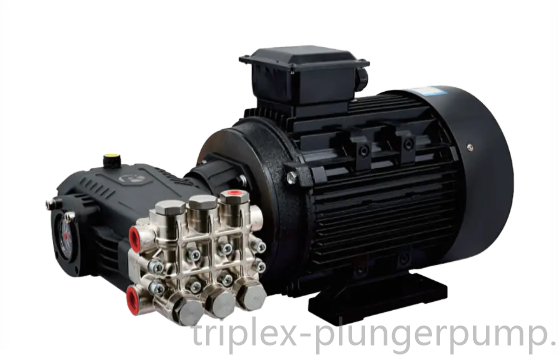
Industrial pumping systems are essential wherever water, cleaning solutions, or other compatible liquids must be delivered at elevated pressure with consistent flow. In demanding environments, a Feike High Pressure Pump can form the core of a cleaning package, supporting equipment operators who need dependable pressure generation, practical maintenance, and a design suited to repeated operation. Selecting the right pump involves more than comparing a pressure figure: buyers should consider the liquid, duty cycle, drive arrangement, inlet conditions, system controls, and the quality of the components that handle the load.
A high-pressure pump converts mechanical energy from an electric motor or another power source into hydraulic energy. As the drive turns the crankshaft, connecting rods transfer motion to the plungers, which move back and forth inside their sealing assemblies. During the suction stroke, inlet valves open and allow liquid to enter the pumping chamber. During the discharge stroke, the inlet valves close and the outlet valves open, sending liquid into the high-pressure line. Repeating this cycle creates a controlled flow that can be used by a nozzle, lance, spray system, or industrial process.
The pump head and fluid-end components are central to service life. Seals and valve elements need to be compatible with the pumped liquid. Abrasive particles, chemical additives, unsuitable water quality, or excessive temperature can accelerate wear. Buyers should describe the actual medium and its condition when requesting a quotation rather than assuming that every pump is suitable for every liquid.
Pressure and flow must be evaluated together. Pressure describes the resistance the system can overcome, while flow indicates how much liquid is delivered over a period of time. A cleaning application may require sufficient flow to carry away loosened dirt as well as enough pressure to remove deposits. If the pump is selected only for a high pressure rating, the resulting system may not provide the cleaning coverage or productivity expected by the operator. Conversely, a flow rate that is too high for the available motor, plumbing, or nozzle arrangement can create unnecessary load. The pump, motor, drive, relief valve, hoses, filters, and application equipment should be considered as one integrated system.
In industrial cleaning, high-pressure pumping equipment is used for washing machinery, cleaning production areas, maintaining vehicles, removing residues from suitable surfaces, and supporting specialized water-jet operations. It can also be incorporated into equipment maintenance systems where controlled water delivery is required. Operators should follow the equipment supplier's instructions and the site's safety procedures, especially when working around electrical equipment, confined spaces, or personnel.
A practical installation begins with a stable base and a drive arrangement aligned with the pump manufacturer's requirements. The inlet line should be appropriately sized and arranged to reduce restrictions, air entry, and turbulence. A clean and adequate water supply is important because a restricted inlet can cause cavitation, vibration, noise, and premature damage to internal parts. The discharge side should include correctly rated hoses, fittings, pressure controls, and protective devices. A pressure relief or regulating arrangement helps prevent the system from exceeding its intended operating limit.
Routine maintenance is most effective when it is planned around operating hours, liquid quality, and the severity of the duty. Operators should inspect connections for leakage, monitor unusual noise or vibration, keep filters clean, and check that the water supply remains stable. Seals, valves, and other wear components should be examined according to the manufacturer's service guidance. Before opening the pump, the drive must be isolated and all pressure safely released.
A triplex plunger design is often selected when the application benefits from continuous reciprocating delivery and a compact pumping assembly. Three plungers share the pumping cycle, so discharge pulses are distributed across each revolution. This arrangement can help maintain a steadier supply to the downstream equipment, although the actual pressure fluctuation also depends on system design and whether suitable dampening is installed. The crankcase, bearings, connecting rods, and lubrication system support the mechanical movement, making correct lubrication and adherence to service intervals important. Buyers should confirm the recommended lubricant and maintenance procedure.
In food-processing or other hygiene-sensitive settings, material compatibility and cleaning procedures should be reviewed carefully. Where water may freeze, the system needs an appropriate shutdown and storage procedure to protect the fluid end and pipework. These details are worth discussing before equipment is specified.
A Feike High Pressure Pump supports stable operation when its working conditions remain within the manufacturer's limits and the surrounding system is designed correctly. Procurement decisions should balance performance needs with maintainability, liquid compatibility, and total operating requirements rather than focusing on one headline specification. For equipment planning, model comparison, or application discussions, buyers can review the available pump range at https://www.triplex-plungerpump.com/product/pumps/ and identify the configuration that best fits their industrial cleaning or liquid delivery system.